
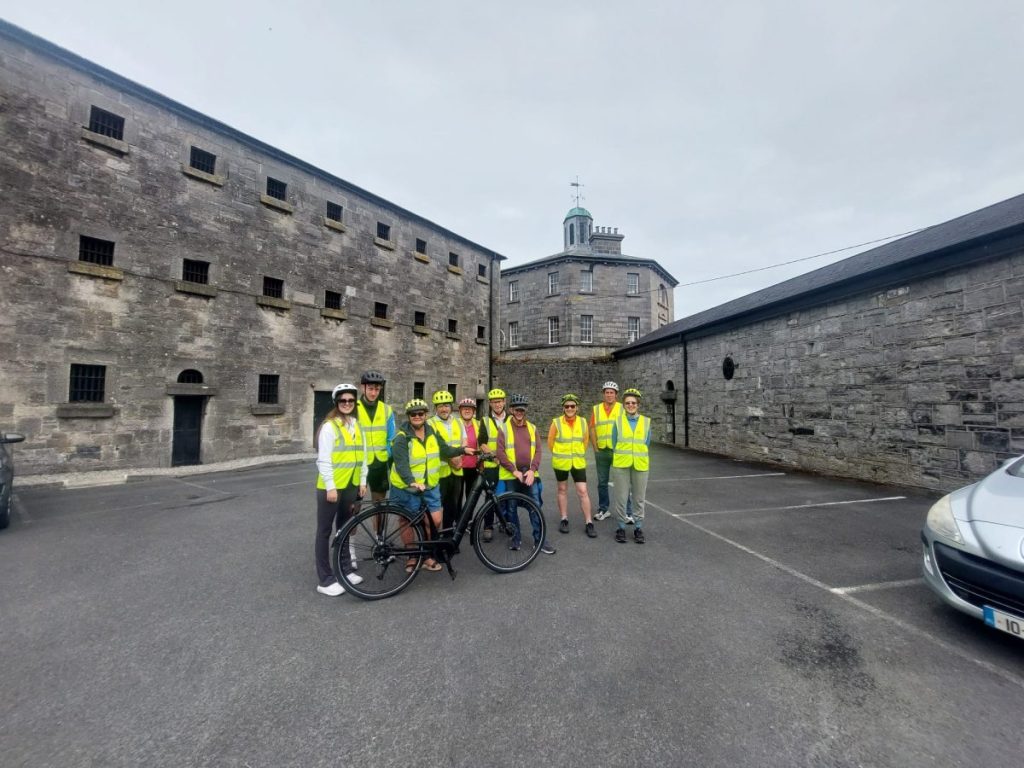
For the third year in a row, I was delighted to participate in National Heritage Week. This year's theme was 'Heritage At Risk', and a route was devised taking in both an ancient site and a Victorian one, under the title 'Rural and Urban Heritage, and the Roads in Between'. The concept was to visit a site in the centre of Nenagh where there are ambitious plans in progress to preserve the property for the future, and another site in the Tipperary Countryside where past efforts have preserved heritage for future generations. And as ever, the group got to enjoy the cycle between the two sites along quiet country roads. The first event, on the 16th August, had 5 participants, while the second one a week later had a group of 10. Safe to say all enjoyed the day, and I hope all went away with some food for thought! Participants raged in age from teenage to 60s, and came from the Nenagh area, as well as Limerick and South Tipperary.
Nenagh Gaol
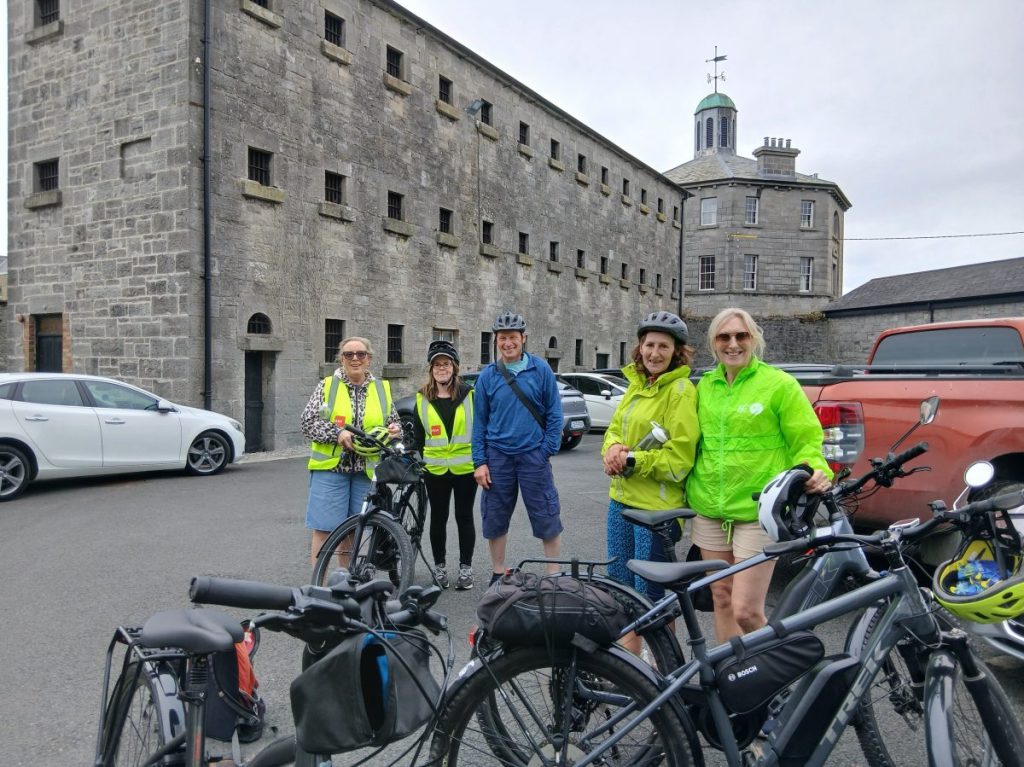
Nenagh Gaol was operational from 1842 to 1887. In its time of operation, it housed all manner of prisoners, from those who had stolen a loaf of bread simply to survive to revolutionaries to hardened criminals. And more than a few wrongly accused. The principle behind the prison was 'atonement', and initially all prisoners were in single cells, in order to give them plenty of time to 'think about what they had done'. Other ways in which atonement was sought included treadmills where prisoners would walk for hours on end, sometimes to provide power for the prison, other times just as a punishment; and sometimes they would be given a pile of rocks to move from point A to point B - and then back again.
At the front of the prison is the gatehouse, and it is here that the gallows were situated. Prisoners would step out to be executed in front of a crowd. Some of the crowd would be friends and family, others would be there to jeer or to cheer. In the years the prison was operational, 17 prisoners were executed. While the prison was open, it had 7 wings like the one shown below, with a guard able to stand in the governor's house in the centre and observe all the wings. The design also made it easy to seal off a wing in the event of trouble.
After the gaol was closed, it became a convent and school, and 6 of the wings were pulled down.
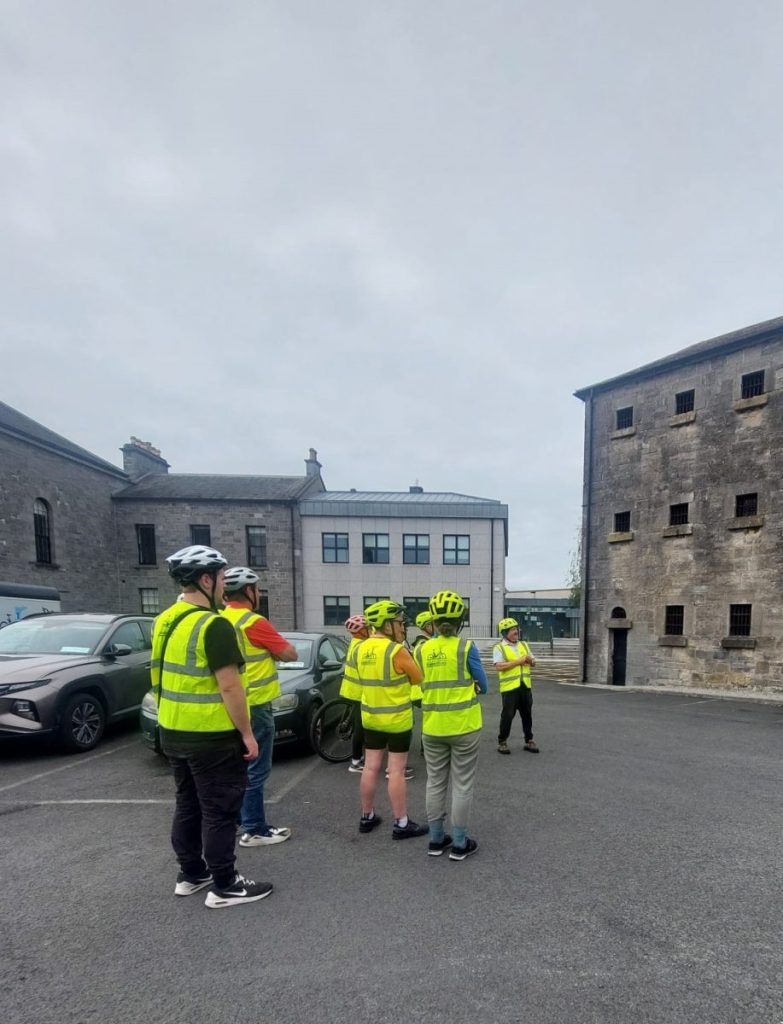
Earlier this year, the Tipperary Council announced ambitious plans to turn the gaol into a major tourist attraction. Over the years, tours of the governor's house have been available, in its role as Heritage Centre, and select groups had been allowed inside the gaol building. However it is in a bad state of repair. The plans are to refurbish some of the cells, and set up interactive exhibits. There will also be a walkway from the Governor's house into the remaining wing, and it is hoped that the underground passage to the courthouse will be reopened. This was of course built so that prisoners could attend their court appearance with a minimum of security risks. We look forward to these developments, and I am sure that this will become a major tourist attraction to help bring visitors to Nenagh and North Tipperary.
Killodiernan Church
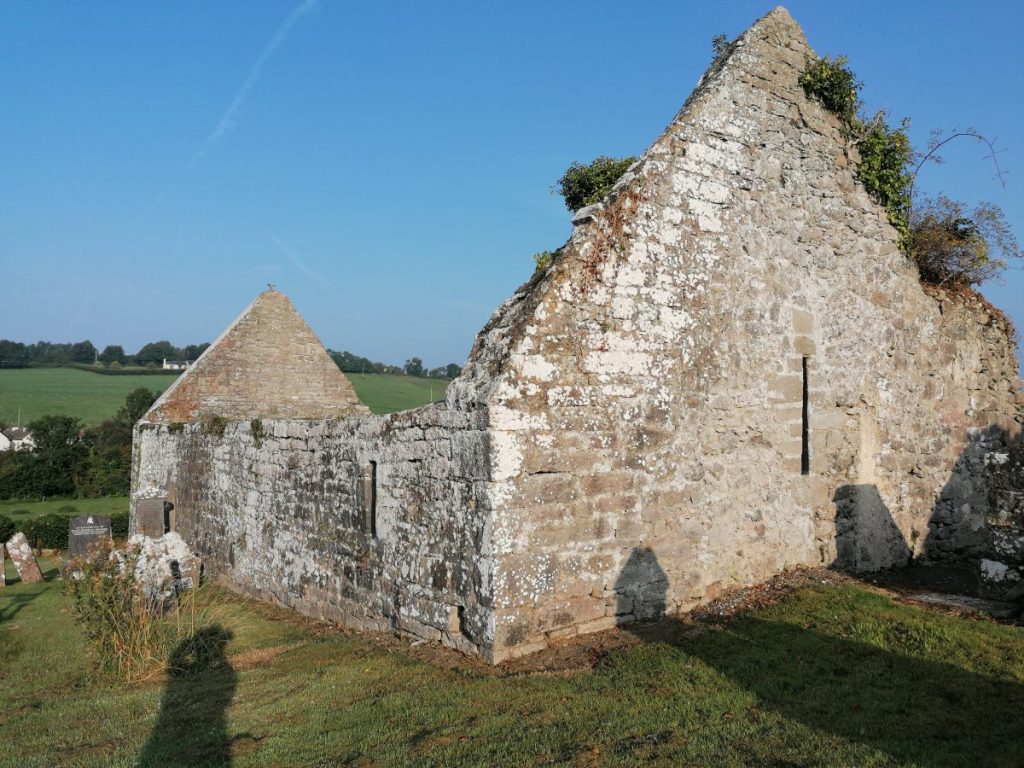
Killodiernan Church was built in the 12th Century, but had fallen out of use as a parish church in the 16th Century. It is still used as a graveyard, however, and offers a beautifully peaceful place to visit late relatives. By the 1970s, the gable end and the romanesque doorway were in a bad state. A group called 'Friends of Old Killodiernan Church' was formed with an aim of preserving the building for future generations. With assistance from FAS, they worked to rebuild the gable end and repair the doorway. Today the building stands solid, and will be with us for many generations to come. The work they did is testament to what can be achieved with the appropriate skills and willpower, and while there are certain parts of the building where the rework is visible, it was done in a such a way that it all fits with the original design of the church, and has left us with a beautiful monument to times gone by.
One side effect of the restoration work was that an altar stone was unearthed, which includes a rock (now propped up against the wall) with 3 circles on it, representing the Holy Trinity. This design is very rare on Irish churches, and where it is seen, it tends to be on buildings from the 6th Century. The original building would have been much smaller, as it was considered ‘disrespectful’ to build a church bigger than St Patrick’s chapel at Armagh.
The Roads In Between
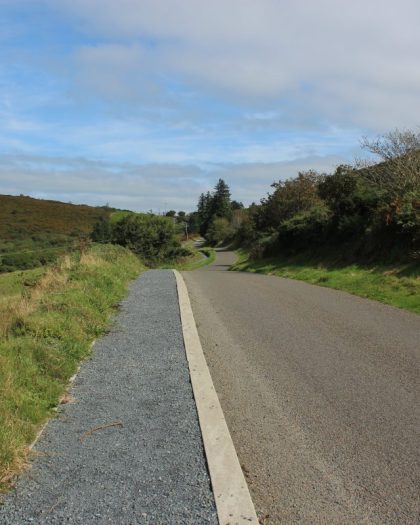
Between Nenagh and Killodiernan, there is a network of quiet country roads, and both groups enjoyed a loop through Ballyhogan, Puckaun, Prospect and Knigh before returning to the starting point. We particularly enjoyed a coffee break at Zero 67 Coffee at the Killadangan GAA club. It's a great way to explore roads many have not seen before, even those who are very familiar with the Nenagh area.

-420x525.jpg)