

Start Point
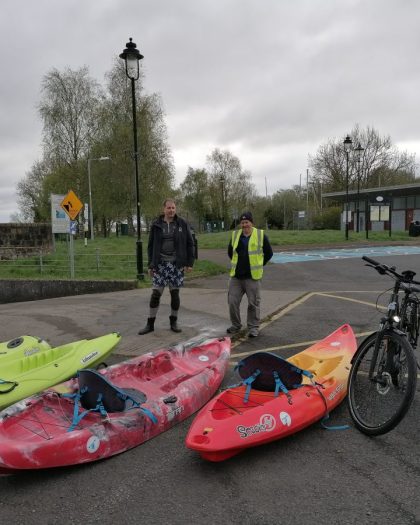
The tour starts from the Killaloe Hotel and Spa (although it can also start from you accommodation elsewhere in the area – simply let us know your preferred start point when booking). From the start point, you will head into the centre of Killaloe, to our first point of interest.
St Molua’s Church

St Molua’s Church was built in the 10th Century on Friar’s Island, to the south of Ballina. In the early years of Irish Independence in the 1920s, a massive hydro-electric scheme was built on the River Shannon, which included a power plant at Ardnacrusha and a dam at Parteen Weir, which effectively split the Shannon into two, with the eastern portion forming the river and the western portion forming a ‘headrace’ to feed the power station. It was an extremely ambitious project which generated enough power for the entire nation at the time, and also sent out a message to the world that the newly independent nation could stand on its own two feet! One side effect of the project was that water levels in the river rose by a couple of meters, which meant that Friar’s Island would be submerged. So the church was dismantled brick by brick and reassembled in the churchyard of St Flannan’s Catholic Church, where you can visit it on your tour.
St Flannan’s Cathedral
After passing through the centre of Killaloe, the next stop is St Flannan’s Church of Ireland Cathedral.

The Cathedral was built in the 12th Century, but was destroyed and rebuilt in the 14th Century. Most of the building as it stands today is from this rebuild. The inside can be explored between 10am and 6pm each day, and features stunning Romanesque and Gothic architecture. The bell tower can also be visited, but must be pre-booked and is subject to availability.
Crossing the River Shannon
Next we cross the River Shannon into the neighbouring town of Ballina in County Tipperary, via the old bridge. There has been a bridge at this spot for at least 1000 years, and the current structure dates to the 17th century. In recent times it has been closed to vehicle traffic, so you can enjoy a peaceful cycle across the river, and take in the views upstream and downstream.

We head north along the river banks before rejoining the road.
Templekelly
Before leaving Ballina, we call in at the ruined church at Templekelly. This was built in the 13th century, and includes many interesting gravestones, including one featuring a skull and crossbones. There are also fine views down over the River.

Back into Killaloe
Next we cross back over the river into County Clare, via the new bridge, opened in 2025. This includes a fine new cycle track which will take us around the west and north of Killaloe. At this point, there is an optional extra. If desired, you can take a side trip into the countryside to the west of Killaloe, seeing views of the Slieve Bearnagh Road and experiencing quiet country roads, before retuning to the new cycle track. If you choose this, it will add an extra 5kms to the cycle.
Brian Boru’s Fort
Whether or not you choose the extra cycle into the countryside, the next point of interest is Brian Boru’s fort.

Brian Boru was a local man, born in the 10th Century, who becme King of Munster after the death of his brother Mathgamain, and in 1002, he became High King of Ireland. He was regarded as a hero in his time, due to defeating the forces of Viking King Ivar, and stopping the (until then) relentless advance of the Northmen into Ireland. Holy Island, a few miles north of here, bears witness to how vicious Viking raids were, so Boru was greatly appreciated in his time for halting this advance! The fort is where he was born, and the earthworks which surrounded it can still be seen, a short distance from the road.
Two Mile Gate
Lough Derg is the 3rd largest lake in Ireland, and at its southern end is a beauty spot known as Two Mile Gate. This is the last place we will visit on the tour, before heading back to the Killaloe Hotel and Spa, where you can avail of a discounted lunch.

For more details on this tour, or any of our other tours, please contact info@loughdergebiketours.ie or you can book here.
-420x525.jpg)